English
 简体中文
简体中文  Esperanto
  Afrikaans
  Català
  Cymraeg
  Galego
  繁体中文
繁体中文  Latviešu
  icelandic
  ייִדיש
  беларускі
  Hrvatski
  Kreyòl ayisyen
  Shqiptar
  Malti
Malti  lugha ya Kiswahili
  አማርኛ
አማርኛ  Bosanski
  Frysk
Frysk  ភាសាខ្មែរ
  ქართული
  ગુજરાતી
  Hausa
Hausa  Кыргыз тили
  ಕನ್ನಡ
ಕನ್ನಡ  Corsa
Corsa  Kurdî
Kurdî  മലയാളം
  Maori
Maori  Монгол хэл
  Hmong
Hmong  IsiXhosa
  Zulu
Zulu  Punjabi
  پښتو
پښتو  Chichewa
  Samoa
Samoa  Sesotho
  සිංහල
සිංහල  Gàidhlig
  Cebuano
  Somali
  Тоҷикӣ
  O'zbek
  Hawaiian
  سنڌي
سنڌي  Shinra
  Հայերեն
  Igbo
Igbo  Sundanese
  Lëtzebuergesch
  Malagasy
  Yoruba
  Español
  Português
  русский
  Français
  日本語
日本語  Deutsch
  tiếng Việt
  Italiano
  Nederlands
  ภาษาไทย
  Polski
  한국어
한국어  Svenska
  magyar
  Malay
Malay  বাংলা ভাষার
  Dansk
Dansk  Suomi
Suomi  हिन्दी
  Pilipino
  Türkçe
  Gaeilge
  العربية
  Indonesia
  Norsk
Norsk  تمل
تمل  český
český  ελληνικά
  український
  Javanese
  فارسی
فارسی  தமிழ்
தமிழ்  తెలుగు
  नेपाली
  Burmese
  български
  ລາວ
ລາວ  Latine
  Қазақша
  Euskal
  Azərbaycan
  Slovenský jazyk
  Македонски
  Lietuvos
  Eesti Keel
  Română
  Slovenski
  मराठी
मराठी  Srpski језик


輸送機托輥:托輥設計真的能防止皮帶損壞並降低維修成本嗎?
In bulk material handling, the conveyor belt itself commands attention. It is visible, expensive, and obviously critical to operations. Yet the components that support the belt—the conveyor carrying roller assemblies that bear the load of thousands of tons of material day after day—determine belt life more directly than any other factor. A misaligned or seized conveyor carrying roller creates a wear point that abrades the belt cover, generates heat, increases power consumption, and ultimately causes premature belt replacement costing tens of thousands of dollars.
輸送機承載滾筒 manufacturers have responded with specialized designs addressing specific operational challenges: material build-up, belt tracking, impact resistance, and environmental corrosion. Among these specialized variants, the spiral idler, parallel comb idler, inverted V type idler, and ceramic conveyor idler each serve distinct applications. These conveyor carrying roller types share common manufacturing elements—high-frequency welded pipes, high-density nylon seals, bearings, and round steel—but differ in surface configuration and functional optimization.
為什麼輸送機承載滾筒的選擇很重要
A conveyor system is only as reliable as its carrying roller train. The conveyor carrying roller supports the belt and the material load while maintaining proper belt alignment. When a roller fails, the consequences cascade:
- 皮帶損壞:被卡住的輸送機承載輥變成靜止的磨料表面,在移動的皮帶蓋上刻出凹槽
- 阻力增加:不旋轉或高阻力滾輪會增加驅動馬達耗電量
- 材質溢出:未對準的滾輪會導致皮帶跑偏,從而將材料從系統側面傾倒
- 結構應力:不均勻的滾筒阻力會產生皮帶張力變化,進而對接頭和驅動裝置施加壓力
以下所述的專用輸送機承載滾輪設計分別解決了特定產業和應用中常見的特定故障模式。
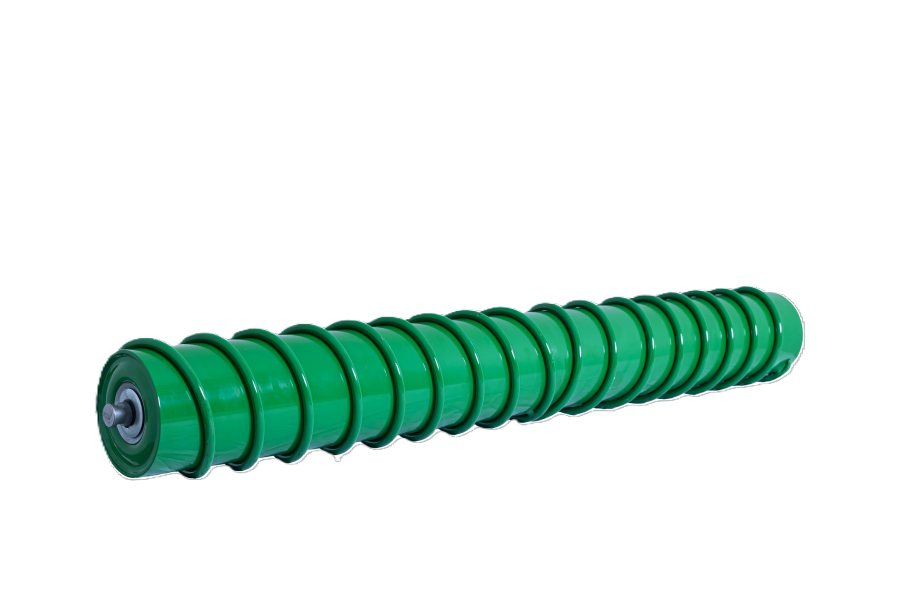
螺旋托輥:黏性材料的自清潔
螺旋托輥是一種輸送機承載滾筒變體,專為物料回運粘附在皮帶表面的應用而設計。螺旋托輥由高頻焊管、高密度尼龍密封件、螺旋彈簧、軸承和圓鋼製成,具有螺旋表面結構。
工作原理
當皮帶經過螺旋惰輪時,螺旋圖案會產生不同的接觸點,從而破壞皮帶和黏附材料之間的表面張力。黏性沉積物(黏土、濕沙、帶有濕氣的碎礦石)從皮帶表面釋放,而不是積聚在輸送機承載滾筒上。
關鍵應用
- 骨材和砂處理
- 黏土和礦物處理
- 選煤廠
- 任何輸送黏性或高水分材料的皮帶
螺旋設計減少了對單獨的皮帶刮刀和清潔器的需求,這些刮刀和清潔器本身就需要維護和調整。對於尋求具有被動自清潔功能的輸送機承載滾筒的操作員來說,螺旋托輥提供了免維護的解決方案。
平行梳狀托輥:帶有自清潔結構的回程皮帶清潔
平行梳形托輥是一種輸送機承載滾筒專為返回帶應用程式而配置。它由高頻焊管、高密度尼龍密封件、梳形橡膠圈、墊片、軸承、圓鋼等組成。
返回帶功能
在輸送機系統的返回側(傳送帶在承載運行下方空行的部分),回運物料可能會積聚,沿著返迴路徑掉落並產生內務處理問題。平行梳狀托輥是一種輸送機承載輥,設計用於固定回程皮帶,同時提供主動清潔作用。
自清潔特性
The comb-shaped rubber rings create a mechanical cleaning action on the belt surface. As the return belt passes over this conveyor carrying roller, adhered material is dislodged and falls away rather than traveling with the belt to the tail pulley. Key performance attributes include:
- 低噪音:與固體表面滾輪相比,梳齒設計降低了接觸噪音
- 厚管壁:增強回程服務的結構耐用性
- 靈活旋轉:低滾動阻力最大限度地減少功率損失
- 低阻力:與傳統回程惰輪相比,軸承阻力減少
對於難以沿著輸送機返迴路徑回運材料的設施,平行梳狀托輥提供了被動清潔解決方案,無需外部電源或控制系統。
倒V型惰輪:皮帶抑制與追蹤
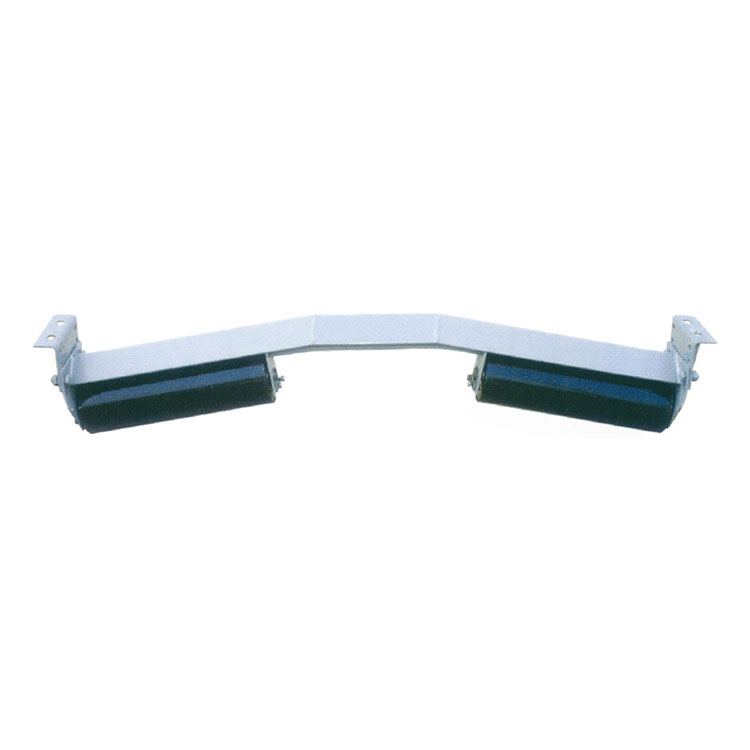
倒V型托輥是一種輸送機承載托輥,主要用於固定帶式輸送機系統中回程帶的角度變化。其主要功能是皮帶抑制,防止皮帶向上飛揚並刮傷結構部件。
皮帶抑制功能
在長輸送機上,特別是具有傾斜部分或高皮帶速度的輸送機上,回程皮帶可能會因為皮帶張力動力學或空氣夾帶而脫離惰輥。向上飛行的輸送帶接觸結構鋼(橫樑、縱梁、走道),導致覆蓋層磨損和潛在的輸送帶邊緣損壞。
此輸送機承載輥的倒 V 形配置形成了一個輪廓,可以捕獲輸送帶並將其壓住,保持一致的接觸,同時允許自由旋轉。與允許皮帶垂直移動的平回程托輥不同,倒 V 形在物理上限制皮帶位置。
密封與環保
此輸送機托輥兩端均採用迷宮式密封結構,並結合雙面密封軸承。此雙屏障系統提供:
- 防塵:迷宮式密封可防止細懸浮微粒進入
- 防水性:雙面密封可防止潮濕環境中的濕氣
- 延長軸承壽命:污染排除與軸承使用壽命直接相關
對於在多塵或潮濕環境(礦場、採石場、室外堆料輸送機)中運作的輸送機承載滾輪產品而言,密封品質通常決定著三個月到三年的使用壽命。
陶瓷輸送機托輥:耐磨、耐腐蝕
陶瓷輸送機托輥是一種由氧化鋁(氧化鋁)表面而不是鋼或橡膠製成的輸送機承載輥。這種材料選擇為惡劣的應用提供了特定的優勢。
材料特性
氧化鋁 (Al2O₃) 陶瓷具有:
- 高硬度:洛氏 HRA 硬度超過 80,明顯比鋼硬
- 耐酸性:不受酸性溶液腐蝕鋼輥的影響
- 耐鹼性:在鹼性環境下化學穩定
- 耐磨性:即使與鋒利、堅硬的材料接觸,也不會刮傷鋼材或橡膠
適合的應用
陶瓷輸送機托輥廣泛應用於礦場、砂石、鋼鐵冶金、化工等產業:
- 高硬度材料(鐵礦石、鐵燧岩、花崗岩)會迅速磨損鋼托輥
- 腐蝕環境(化肥廠、化學品處理)侵蝕鋼表面
- 高皮帶速度會加速傳統輸送機承載輥表面的磨損
權衡
Ceramic idlers typically cost more than steel idlers and are heavier, requiring consideration of belt drive capacity and structural support. However, for operations experiencing idler changeouts every few months due to abrasion, the extended service life of ceramic often justifies the premium. The ceramic conveyor carrying roller offers longer intervals between replacements, reducing labor costs and downtime for maintenance.
通用製造品質指標
在所有輸送機承載輥類型(螺旋、梳狀、倒 V 形、陶瓷)中,無論配置如何,某些製造特性都顯示了品質。
高頻焊管
The tube body of a conveyor carrying roller must be straight, round, and consistently wall-thickness. High-frequency welding produces a seam with minimal internal flash and consistent metallurgy. Poor-quality tubes cause roller eccentricity, creating vibration and belt flutter.
高密度尼龍密封件
Seals exclude contamination. Low-density seals absorb moisture, swell, and lose effectiveness. High-density nylon maintains dimensional stability, keeps lubricant in, and keeps contaminants out. The conveyor carrying roller seal is often the component that determines service life.
軸承
Double-sided sealed bearings (also called sealed-for-life bearings) are pre-lubricated and require no maintenance. The conveyor carrying roller bearing selection must match load and speed requirements; undersized bearings fail prematurely, while oversized bearings increase cost unnecessarily.
圓鋼
軸端和軸承安裝面要求良好的圓度和表面光潔度。不精確的軸會造成不對中,軸承負載不均勻,並導致輸送機托輥組件過早故障。